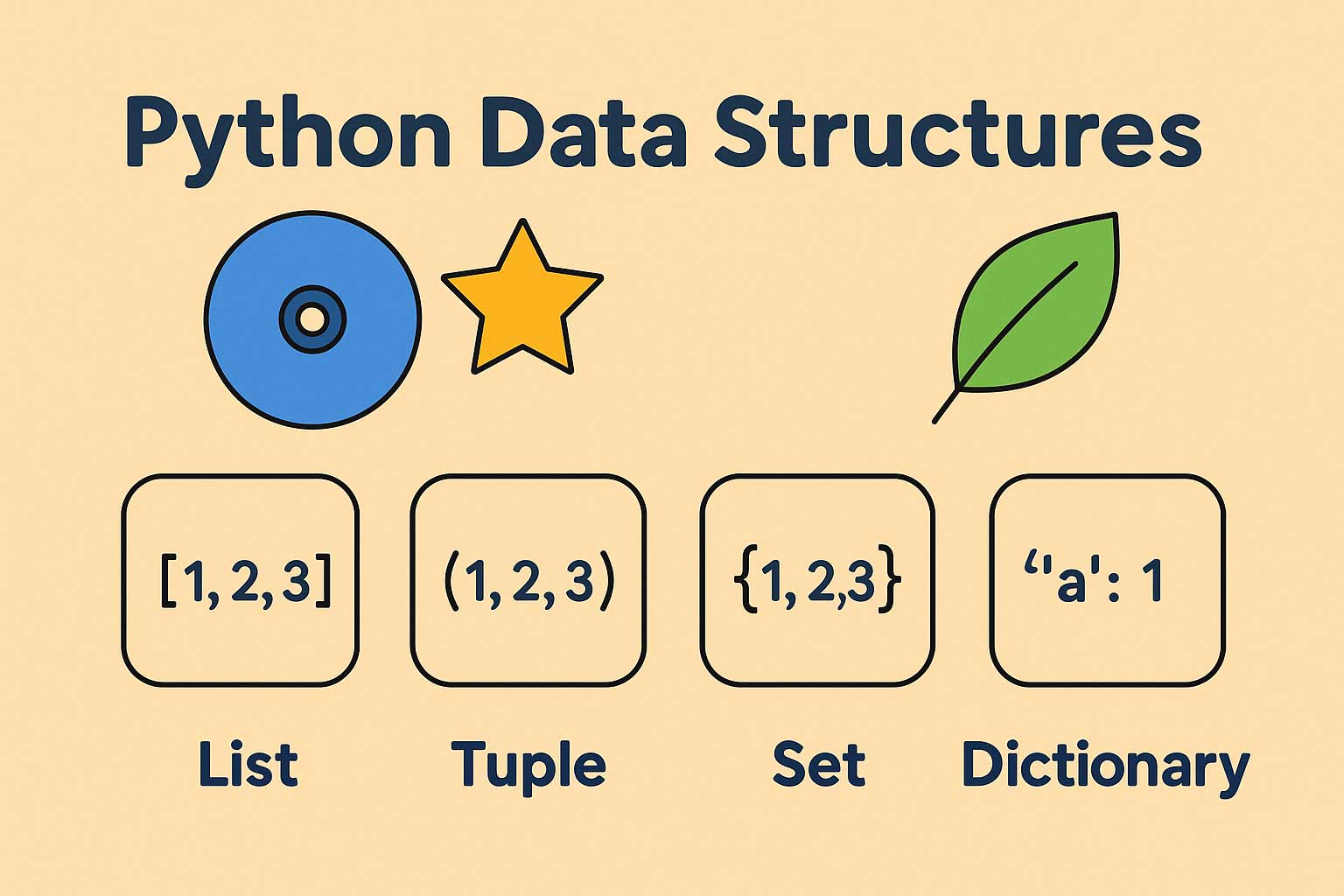
Imagine you have a magical storage box where you can toss anything — chocolates, books, a laptop, a dinosaur toy, your hopes and dreams…
Well, in Python, that magical box exists.
It’s called a List. 🎁🐍
Lists are one of the most powerful and commonly used data structures in Python. They allow you to store multiple items in a single variable — and those items can be numbers, strings, booleans, other lists, or even mixed together.
Let’s dive in and make friends with this superstar of Python!
⭐ What Is a List?
A list is an ordered collection of items.
It looks like this:
my_list = [10, "Amit", 3.14, True]
Yes — Python lets you store different types together.
The list is basically like your shopping cart on Amazon: whatever you add stays in order until you remove or move it.
🎯 Why Lists Are Awesome
✔ They’re ordered
✔ They’re mutable (you can change them)
✔ They can store anything
✔ They grow and shrink as needed
✔ They support tons of helpful operations
Lists are like the Swiss Army Knife of Python data structures. 🗡️🐍
🧱 Creating Lists
You create a list using square brackets:
fruits = ["mango", "banana", "apple"]
An empty list?
empty = []
Want a list from another list?
numbers = list(range(5)) # [0, 1, 2, 3, 4]
📦 Accessing List Items (Indexing)
Python starts counting from 0.
items = ["pen", "notebook", "charger"]
print(items[0])  # pen
print(items[2])  # charger
Negative indexing works too!
print(items[-1]) # charger
🧭 Slicing Lists
Slicing helps you grab portions of your list — like slicing a pizza 🍕.
my_list = [1, 2, 3, 4, 5]
print(my_list[1:4])  # [2, 3, 4]
Shortcut slices:
my_list[:3]   # first 3 items
my_list[3:]   # everything after index 3
my_list[:]    # entire list
🔧 Modifying Lists (Because They’re Mutable 😎)
Replace items:
tools = ["hammer", "screwdriver", "wrench"]
tools[1] = "pliers"
# ["hammer", "pliers", "wrench"]
Replace a bunch at once:
tools[0:2] = ["drill", "saw"]
➕ Adding Items to a List
1️⃣ append() — Add at the end
numbers = [1, 2, 3]
numbers.append(4)
2️⃣ insert() — Add at a specific position
numbers.insert(1, "Amit")
3️⃣ extend() — Add multiple items
nums = [1, 2]
nums.extend([3, 4, 5])
➖ Removing Items
remove()
fruits = ["apple", "banana", "apple"]
fruits.remove("apple")   # removes first match
pop()
fruits.pop()    # removes last item
fruits.pop(1)   # removes item at index 1
del
del fruits[0]
🔍 Searching Inside Lists
in operator
"banana" in fruits # True
index()
fruits.index("banana")
🔁 Looping Through a List
friends = ["Amit", "Rahul", "Sneha"]

for friend in friends:
    print(friend)
Loop with index:
for i, item in enumerate(friends):
    print(i, item)
🧙♂️ List Methods You’ll Love
| Method | What It Does |
|---|---|
.append() | Add one item |
.extend() | Add many items |
.insert() | Insert at index |
.remove() | Remove first match |
.pop() | Remove by index |
.sort() | Sort the list |
.reverse() | Reverse list |
.count() | Count occurrences |
Example:
scores = [40, 10, 90, 30]
scores.sort()     # [10,30,40,90]
scores.reverse()  # [90,40,30,10]
🧩 Nested Lists — Lists Inside Lists!
Welcome to Python’s version of Inception.
matrix = [
    [1, 2, 3],
    [4, 5, 6]
]
Access item 5:
matrix[1][1]
⚡ Real-World Example — To-Do List App
todo = []

todo.append("Finish WordPress project")
todo.append("Write blog on Python Lists")
todo.append("Go for a walk")

print("Your Tasks:")
for task in todo:
    print("-", task)
🚨 Common Errors to Avoid
❌ IndexError
my_list = [1, 2, 3]
print(my_list[5])  # Boom!
❌ Using = Instead of Copy
a = [1, 2]
b = a   # linked!
Correct copy:
b = a.copy()
🎉 Final Thoughts
Lists are the foundation of Python programming.
You’ll use them in:
- Loops
- APIs
- Machine learning
- Django/Flask apps
- Data processing
- Everyday coding
Mastering lists means mastering Python’s core logic.
Leave a Reply