-

Supercharge Your React Apps with React.memo
React.memo is a simple but powerful tool to speed up your React applications by skipping unnecessary re-renders. In this article, Amit Sharma explains how it works, when to use it, and what to keep in mind so you can build smoother and more efficient React components with ease.
-

Mastering the grep Command: A Guide to Efficient Search in Linux
Introduction Searching through files and directories is a common task in Linux, and the grep command is a powerful tool to make this process efficient. Short for Global Regular Expression Print, grep allows you to search for patterns in files and directories with incredible flexibility. This blog will explore the basics of grep, its common
-

Mastering Linux I/O Redirection: A Complete Guide with Examples
Introduction Linux commands follow a basic workflow: they take input, process it, and produce output. By default, the keyboard acts as the standard input device, while the screen serves as the standard output device. However, there are situations where we want to redirect input or output to other sources, such as files. This is achieved
-

The Power of the Pipe (|) in Your Terminal: A Beginner’s Guide
In the world of command-line interfaces (CLI), the pipe (|) is a game-changing operator. If you’ve ever wondered how to harness its power, this guide is for you. The pipe allows you to connect commands, creating powerful workflows with minimal effort. Let’s dive in to understand what it is, how to use it, and why
-
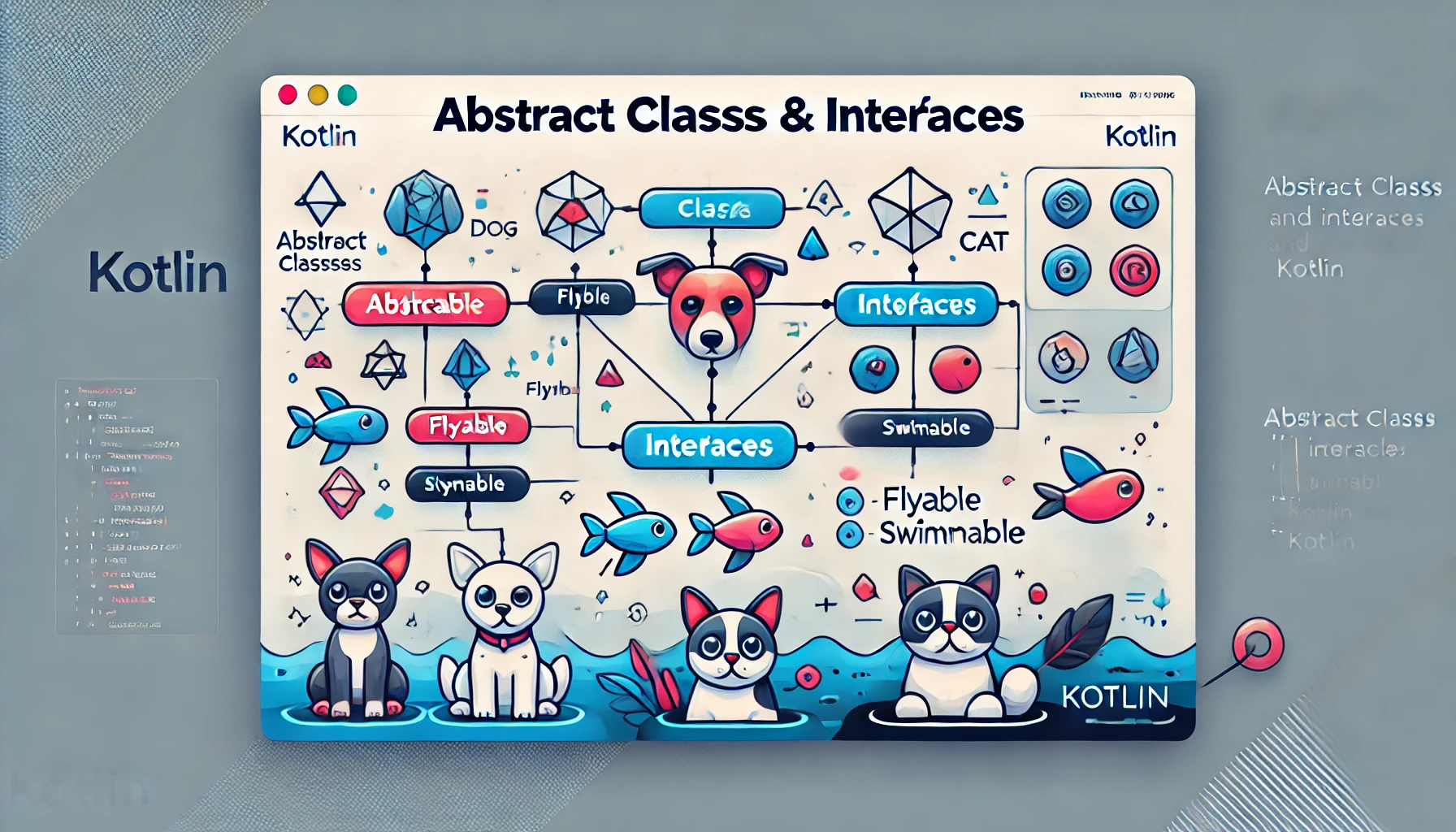
Abstract Classes vs Interfaces in Kotlin: Understanding the Key Differences and When to Use Them
Abstract Classes vs Interfaces in Simple Terms In Kotlin, abstract classes and interfaces are tools used to define shared behaviors for multiple classes. While they have similarities, they serve slightly different purposes and are used in different scenarios. 1. What is an Abstract Class? Key Points: Example: abstract class Animal(val name: String) { abstract fun
-

Understanding dp and sp: A Complete Guide to Scalable UI Design in Android
In Android, dp (density-independent pixels) and sp (scale-independent pixels) are two units used to ensure that the UI design scales well across different screen sizes and densities. They help maintain a consistent and user-friendly appearance of elements on devices with varying screen resolutions and sizes. 1. What is dp (Density-Independent Pixel)? Why Use dp? Conversion
-
Classes are “final” by default in Kotlin
Did you know Kotlin prevents inheritance by default? Classes, functions, and properties are all final unless you mark them open, abstract, or sealed. This blog explains what “final by default” really means, why Kotlin chose this design, and how it affects your Android and Jetpack Compose development—complete with practical examples.
-
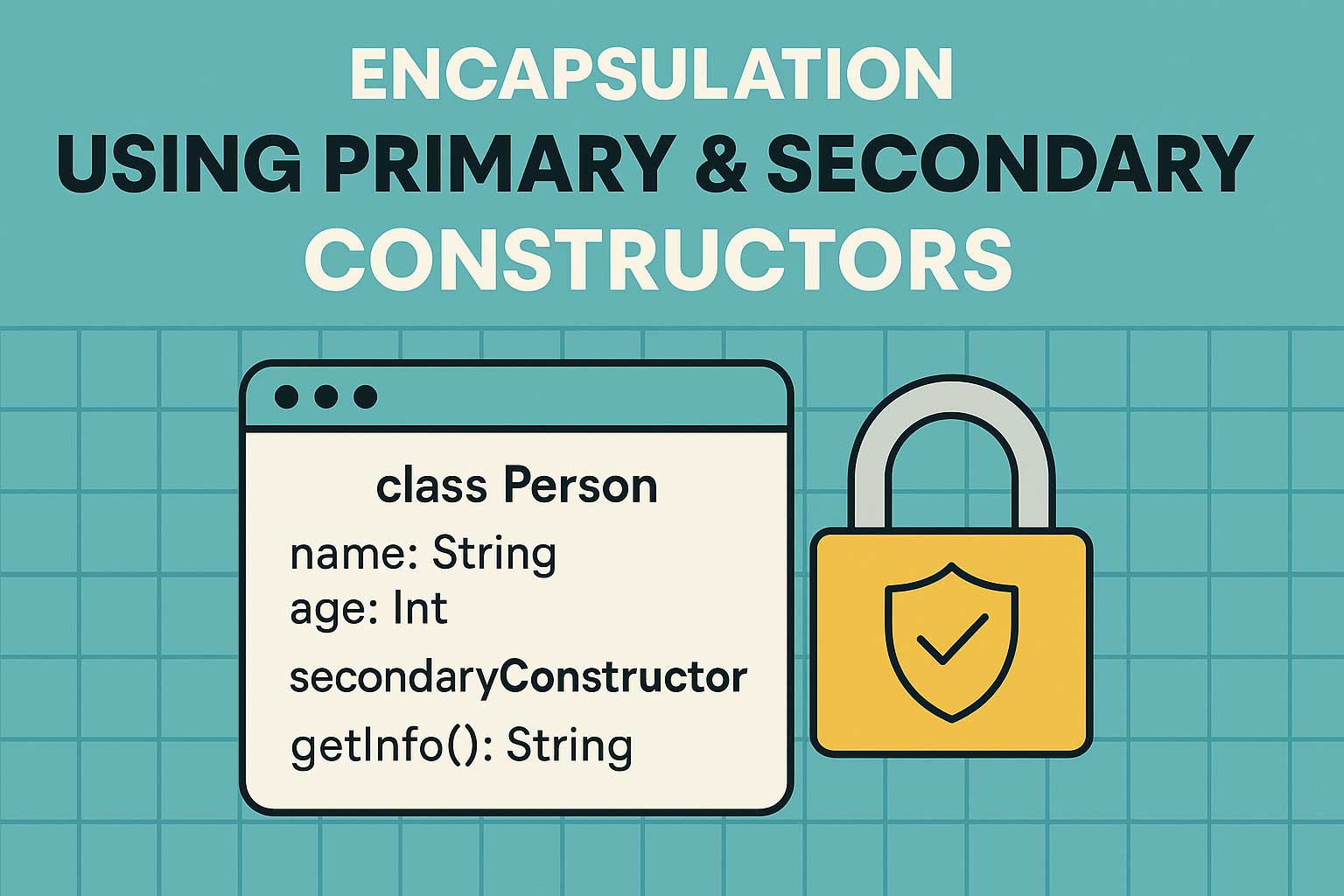
🛡️ Encapsulation Using Primary & Secondary Constructors in Kotlin
Encapsulation in Kotlin isn’t just about hiding data — it’s about creating safer, cleaner, and smarter classes. In this article, we explore how primary and secondary constructors work together to control object creation, protect class properties, and keep your code elegant and bug-free. Perfect for beginners and Kotlin learners!
-
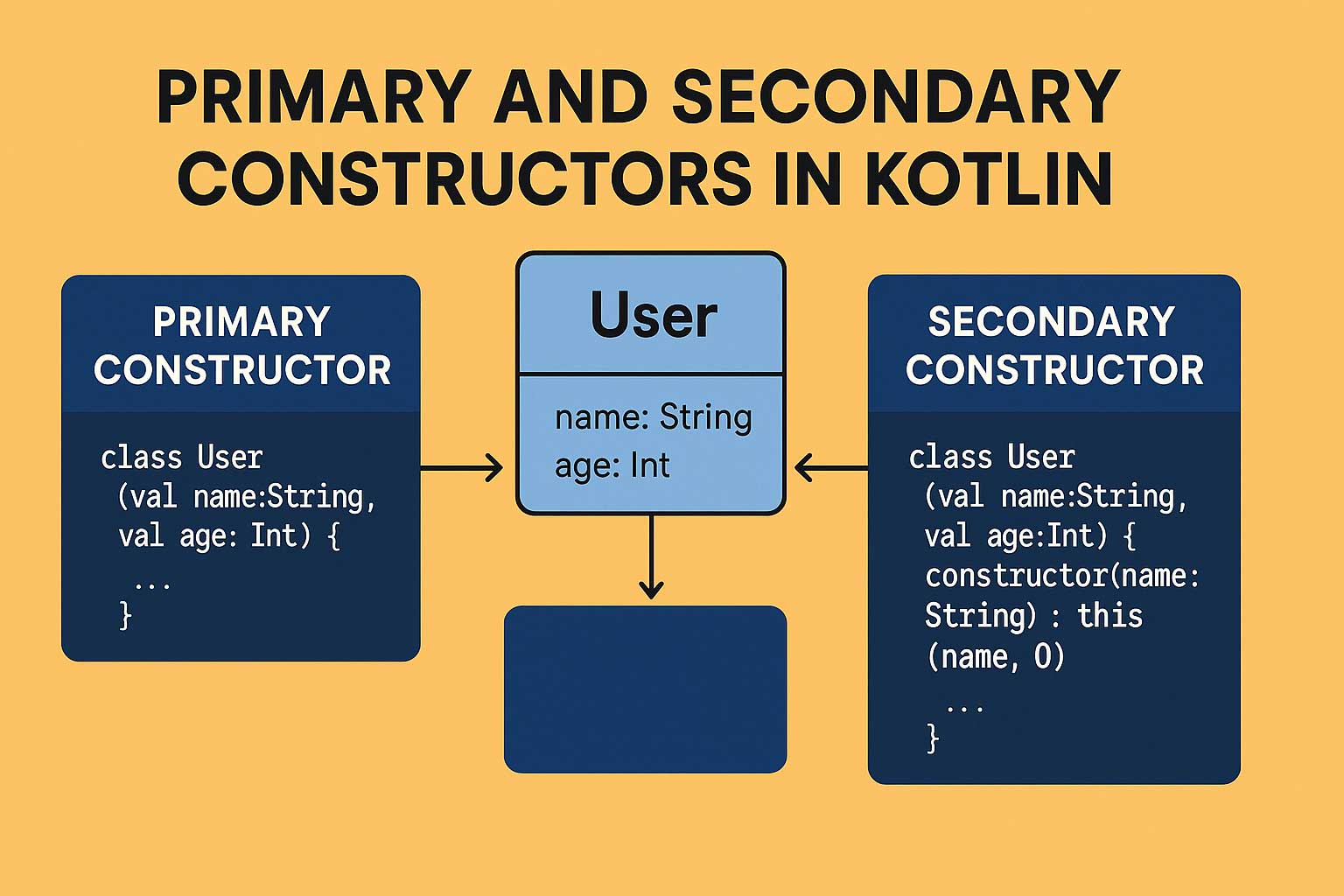
🚀 Primary vs Secondary Constructors in Kotlin — Explained the Fun Way!
Kotlin gives you two powerful ways to create objects: primary constructors for clean, simple initialization and secondary constructors for more flexible setups. In this friendly, easy-to-understand guide, you’ll learn how both work, when to use them, and how they relate to real-world Android and Jetpack Compose development.